Case study · 2026
Old Barn Star: Content That Answers Real Searches
An existing furniture site, grown with content mined from its own search data, not guesswork.
- Client
- Old Barn Star
- Scope
- Process Automation
- Year
- 2026
- Live
- oldbarnstar.com
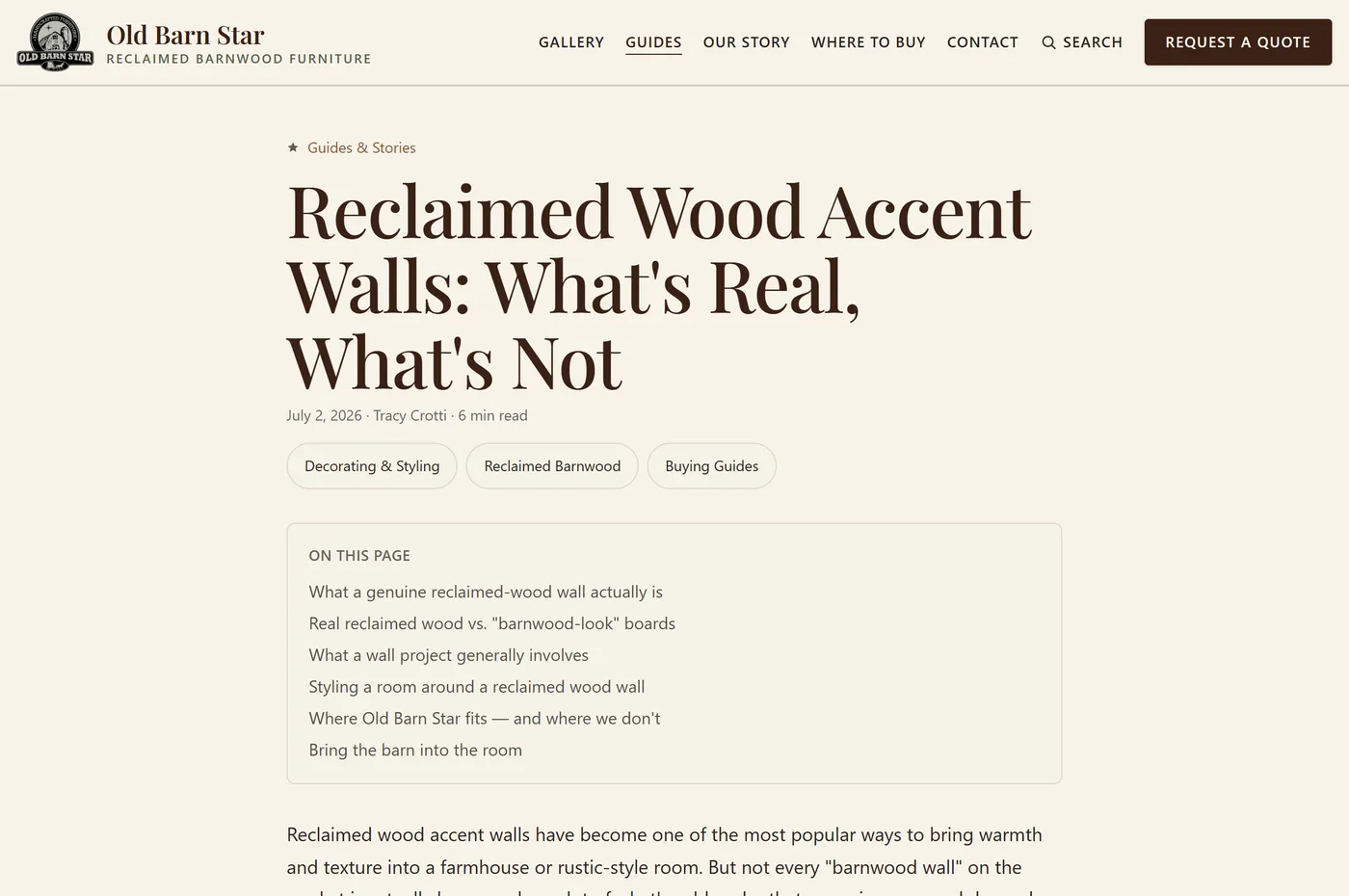
Old Barn Star sells reclaimed-barnwood furniture out of Pennsylvania. The site already existed, already ranked for some things, and already had a family running the business behind it. Full disclosure: that family is mine. The question was what content to add next. Most businesses answer that by guessing.
Where the topics came from
Search Console keeps a record of every search where the site appeared, including all the ones where nobody clicked. That is a list of questions real people are already asking, sitting unread.
A script pulls that data and ranks the openings: searches where the site shows up but not high enough, questions it never answers at all. Guides get written against that evidence and nothing else. No topic made the list because it sounded good in a meeting.
How it ships
Finished drafts land in the family’s CMS as drafts, not as published pages. They review them in Sanity Studio and press publish themselves. Nothing goes live without a person deciding it should.
The loop is scripted end to end: mine the evidence, write the guides, deliver the drafts, measure what happened. Next month, run it again.
What 28 days measured
All numbers below are from Search Console, July 14 through August 10, 2026.
- Guides now hold 10 of the site’s top 20 pages by impressions.
- The kitchen island buying guide reached page 1 within weeks: average position 8.0, with 885 impressions and 14 clicks in the window.
- A content insert on an older page moved its average position from 12.8 to 10.0 inside two weeks.
- One title and description rewrite took a page from 117 impressions and zero clicks to its first clicks.
Small numbers, printed anyway. A small family business does not need ten thousand clicks a month. It needs to be on page 1 when someone types the exact thing it sells, and it needs to know which changes moved it there. Measured beats guessed.